
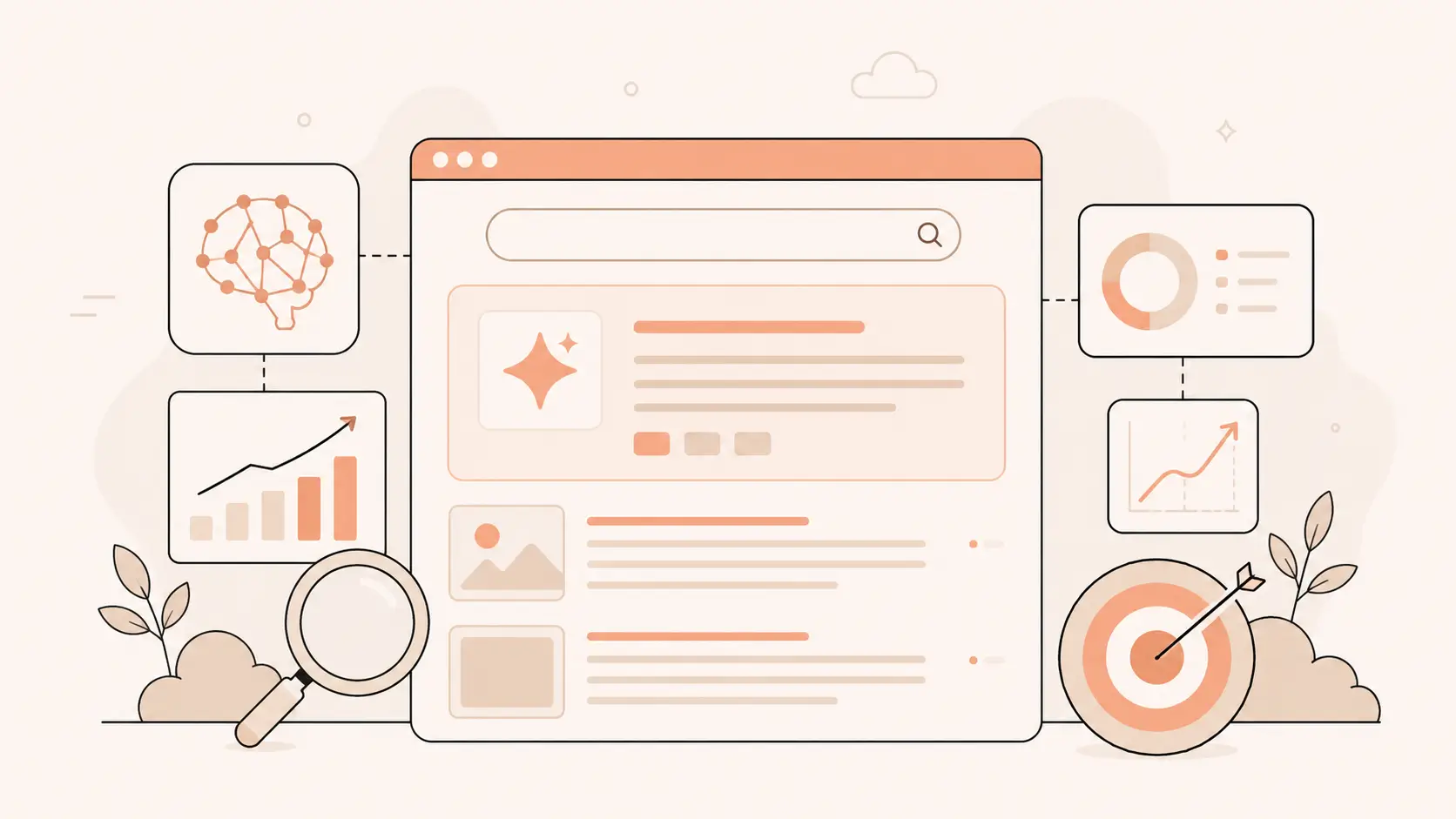
SEO in 2026 is no longer just about ranking on the first page of Google. The search results page has changed. Google is now using AI Overviews and AI Mode to answer many queries directly before users even reach traditional organic results.
This does not mean SEO is dead. In fact, SEO is becoming more important, but the rules are changing. Websites now have to think beyond blue links, keyword rankings, and basic content optimization. The new goal is to become a trusted source that Google’s AI systems can understand, summarize, and cite.
AI Overviews are changing how people search, how they click, how they compare information, and how websites get visibility. In 2026, the winners in SEO will not be the websites publishing the most content. They will be the websites publishing the most useful, original, trustworthy, and well-structured content.
What Are Google AI Overviews?
Google AI Overviews are AI-generated summaries that appear at the top of some search results. Instead of only showing a list of websites, Google may now provide a direct answer, explanation, comparison, or step-by-step summary.
For example, if someone searches “how to improve website speed,” Google may show an AI Overview explaining the main steps, such as optimizing images, improving hosting, reducing JavaScript, using caching, and improving Core Web Vitals. Along with the answer, Google may include links to supporting websites.
This changes the search experience because users can get the basic answer immediately. They may not need to click a website unless they want more detail, proof, tools, examples, or expert guidance.
Why AI Overviews Matter for SEO in 2026
AI Overviews matter because they sit above traditional organic results. Even if your website ranks number one, an AI Overview may appear before your result and answer the user’s question first.
This affects SEO in three major ways.
First, organic click-through rates can decrease for informational keywords. When users get a quick answer from Google’s AI summary, fewer people may click traditional links.
Second, visibility is becoming more complex. A website may not rank in the top three traditional results but may still be cited inside an AI Overview. This means AI citation visibility is becoming a new SEO layer.
Third, content quality matters more than ever. Thin, generic, rewritten, or AI-generated content with no original value is less likely to stand out. Google’s AI systems need reliable sources, clear explanations, strong context, and trustworthy signals.
Search Is Becoming Answer-First
Traditional Google Search was link-first. A user searched, Google showed ten blue links, and the user clicked a result to find the answer.
In 2026, Google Search is becoming answer-first. The user asks a question, and Google tries to provide a direct answer with supporting links.
This means websites need to change how they write content. Long introductions, vague explanations, and keyword-stuffed paragraphs are no longer enough. Content should answer the main question clearly near the top, then provide deeper explanation below.
A strong SEO article in 2026 should usually include:
A direct answer in the first few paragraphs
Clear H2 and H3 headings
Short sections that answer specific sub-questions
Original examples, data, experience, or expert insight
Updated information
Internal links to related topics
Strong author credibility and trust signals
The easier your content is to understand, extract, and verify, the better chance it has of being used by AI-driven search systems.
AI Overviews Are Reducing Some Organic Clicks
One of the biggest concerns for website owners is traffic loss. AI Overviews can satisfy simple informational searches without requiring a click.
For example, searches like “what is schema markup,” “what is technical SEO,” or “how does crawling work” may be answered directly in the search result. Users who only need a quick definition may not visit any website.
This is why websites should not depend only on basic definition-based content. In 2026, simple “what is” articles are becoming harder to monetize unless they offer something deeper than a basic answer.
To protect traffic, your content should provide value that AI summaries cannot fully replace, such as:
Real examples
Case studies
Templates
Checklists
Step-by-step tutorials
Screenshots
Tools
Original research
Expert opinions
Comparison tables
Industry-specific recommendations
The more useful your page is after the basic answer, the more likely users are to click.
Ranking Number One Is No Longer the Only Goal
In the old SEO model, the main goal was simple: rank as high as possible. In 2026, ranking is still important, but it is not the complete picture.
Now you also need to ask:
Is my website being cited in AI Overviews?
Is my brand mentioned in AI-generated answers?
Does my content answer complex questions clearly?
Is my page trusted enough to be used as a source?
Does my website have topical authority?
Are users staying, reading, and converting after they click?
AI Overviews are creating a new kind of visibility. Sometimes, a website cited inside an AI Overview may get fewer clicks than a traditional organic result, but the clicks it does get may be more qualified. Users who click after reading an AI summary often want deeper details, expert help, or a solution they can apply.
This means SEO reporting should also change. Do not only track rankings. Track impressions, CTR, conversions, brand searches, assisted conversions, engagement, and AI visibility where possible.
Topical Authority Is Becoming More Important
Google’s AI systems do not only look at one page. They try to understand topics, entities, relationships, and source reliability.
That is why topical authority is one of the most important SEO strategies in 2026.
If your website only has one article about technical SEO, it may be difficult to compete. But if your website has a full content cluster covering crawling, indexing, Core Web Vitals, schema markup, JavaScript SEO, sitemaps, redirects, canonical tags, internal linking, and page speed, Google can better understand your expertise.
A strong topical authority strategy includes:
One main pillar page for a broad topic
Supporting articles for subtopics
Internal links between related pages
Updated content
Consistent terminology
Expert-level detail
Clear structure
Original insights
For example, instead of publishing only one article called “Technical SEO Guide,” a website should build a complete technical SEO hub with separate pages for each important subtopic.
This helps both users and search engines understand that your website is a serious resource.
Content Needs to Be More Original
AI has made it easy to produce average content. That is exactly why average content is becoming less valuable.
In 2026, Google Search is filled with articles that repeat the same points. AI Overviews can summarize generic information very easily. If your content only says what hundreds of other websites already say, users have little reason to click.
To compete, your content should include original value.
This can include:
Your own analysis
Your own screenshots
Your own testing
Your own opinions
Real client examples
Data from your website or industry
Expert quotes
Practical workflows
Mistakes to avoid
Updated recommendations
For SEO content, this is especially important. Do not only explain what AI Overviews are. Show how they affect keyword research, CTR, content planning, technical SEO, and reporting. Give the reader something useful they cannot get from a short AI summary.
How to Optimize Content for AI Overviews in 2026
There is no magic schema or special trick that guarantees inclusion in AI Overviews. However, there are smart SEO practices that can improve your chances of being understood and cited.
1. Answer the Main Question Clearly
Start with a direct answer. If the article is about AI Overviews, explain what they are and why they matter within the first few paragraphs.
Avoid long, empty introductions. Google and users both prefer clarity.
2. Use Question-Based Headings
AI Overviews often appear for question-style searches. Use headings that match real user questions, such as:
What are AI Overviews?
How do AI Overviews affect SEO?
Do AI Overviews reduce website traffic?
How can websites appear in AI Overviews?
Is SEO still worth it in 2026?
This makes your content easier to scan and easier for search systems to understand.
3. Add Short Summary Sections
After explaining a complex topic, add a short summary or key takeaway. This helps users and AI systems quickly understand your main point.
4. Build Strong Internal Links
AI search systems need context. Internal links help connect related topics on your website. If you mention Core Web Vitals, link to your Core Web Vitals guide. If you mention schema markup, link to your schema guide.
This improves crawlability, topical authority, and user experience.
5. Keep Content Fresh
AI search changes quickly. Articles about SEO, Google updates, AI Overviews, and search trends should be updated regularly.
Add a “Last updated” date when appropriate. Review outdated screenshots, old statistics, broken links, and old recommendations.
6. Strengthen E-E-A-T Signals
Experience, expertise, authoritativeness, and trust are still important. Add author bios, cite reliable sources, show real experience, and avoid unsupported claims.
For YMYL topics such as health, finance, legal, and safety, trust signals are even more important.
7. Use Structured Data Correctly
Structured data does not guarantee AI Overview visibility, but it helps Google understand your page. Use schema where it makes sense, such as Article, FAQ, HowTo, Product, Review, Organization, LocalBusiness, and Breadcrumb schema.
Make sure structured data matches the visible content on the page.
Keyword Research Is Also Changing
Keyword research in 2026 is not only about search volume. A keyword with high volume may bring fewer clicks if AI Overviews answer the query directly.
SEO teams should now evaluate keywords based on:
Search intent
AI Overview presence
Click potential
Conversion potential
SERP layout
Competition
Brand relevance
Content depth required
Some informational keywords may still be useful for authority building, even if they do not drive many clicks. But for traffic and leads, websites should focus more on high-intent keywords, comparison queries, problem-solving queries, local searches, and keywords where users need tools, services, templates, or expert help.
For example, “what is SEO” may be heavily affected by AI summaries. But “SEO audit service for small business,” “technical SEO checklist for WordPress,” or “Core Web Vitals consultant” may still have stronger click and conversion potential.
The Rise of GEO: Generative Engine Optimization
In 2026, SEO is expanding into GEO, or Generative Engine Optimization.
GEO means optimizing your brand, website, and content so generative AI systems can understand, trust, and mention you. This includes Google AI Overviews, AI Mode, ChatGPT, Perplexity, Gemini, and other AI answer engines.
GEO does not replace SEO. It builds on SEO.
A strong GEO strategy includes:
Clear brand positioning
Consistent information across the web
Strong topical authority
High-quality mentions from trusted websites
Expert content
Original research
Clear entity signals
Accurate business profiles
Updated About, Contact, and author pages
Content that answers real user questions
In simple words, your brand needs to be easy for AI systems to understand and trust.
What Website Owners Should Do Now
If you want to succeed in SEO in 2026, do not panic. Focus on improving the quality, structure, and usefulness of your website.
Start with these actions:
Audit your top informational pages and improve them with examples, FAQs, updated data, and stronger formatting.
Build content clusters instead of publishing random articles.
Track CTR changes for keywords where AI Overviews appear.
Improve internal linking between related articles.
Add original insights, screenshots, checklists, or templates.
Strengthen author profiles and trust pages.
Keep technical SEO clean, including indexing, crawlability, speed, mobile usability, and schema.
Create content for complex queries, not only basic definitions.
Monitor brand visibility in AI search tools.
Focus on conversions, not only traffic.
Is SEO Still Worth It in 2026?
Yes, SEO is still worth it in 2026, but outdated SEO is not.
Publishing generic articles, targeting keywords blindly, and depending only on rankings is no longer enough. AI Overviews have changed how users interact with search results, but they have not removed the need for high-quality websites.
People still need trusted sources. They still need expert explanations. They still need products, services, comparisons, tools, reviews, and detailed guidance. Google’s AI systems also need reliable content to build their answers.
The future of SEO belongs to websites that are genuinely useful.
Final Thoughts
AI Overviews are one of the biggest changes in Google Search history. They are turning search from a list of links into an answer-driven experience. This creates challenges for website traffic, especially for basic informational content. But it also creates new opportunities for brands that produce original, trustworthy, and deeply helpful content.
SEO in 2026 is not about tricking algorithms. It is about becoming the source that algorithms and users both trust.
To win in this new search environment, focus on clarity, authority, originality, technical quality, and real user value. The websites that adapt now will have a stronger chance of staying visible as Google Search becomes more AI-powered.